Epistolary novels tell stories through letters, diaries, emails and texts. Learn how the form works, famous examples and how to write one.
My Fascination with Epistolary Narratives
I've always been captivated by the intimate whisper of a story unfolding through letters. There's something inherently personal, almost voyeuristic, about delving into someone else's correspondence, isn't there? This is the core appeal of the epistolary novel, a genre that eschews traditional narrative structures for a mosaic of letters, diary entries, emails, or even official documents. For me, it's not just a storytelling device; it's an immersion into the character's psyche, an unfiltered stream of consciousness that allows for a level of intimacy rarely achieved in third-person narration.
I find myself leaning in, metaphorically speaking, as if privy to a secret conversation, piecing together events and motivations through the very words the characters choose to commit to paper – or, increasingly, to screen.
My journey into the world of epistolary novels began, like many, with classics such as Bram Stoker’s Dracula. The sheer terror and suspense built through the alternating perspectives of various characters' journal entries, newspaper clippings, and ship’s logs left an indelible mark on me. It wasn't just the monster that was frightening; it was the slow, creeping realization of its presence through disparate, seemingly unconnected observations.
This fragmented approach, I quickly discovered, was a hallmark of the genre, allowing for a unique kind of dramatic irony and suspense. I found myself becoming a detective of sorts, connecting the dots and anticipating revelations long before the characters themselves. This active participation, this intellectual engagement, is a major draw for me. It's not a passive reading experience; it's an interactive one, where I feel like a co-creator of the narrative, filling in the gaps and inferring emotions from the spaces between the lines.
Epistolary novels, which convey their narratives through letters, diary entries, and other forms of correspondence, offer a unique perspective on storytelling that allows readers to engage deeply with characters' thoughts and emotions. For a deeper understanding of how narrative perspective can shape a story, you might find it interesting to explore the article on the power of perspective in storytelling. This article discusses how the choice of narrator influences the reader's experience and interpretation of the plot. You can read more about it here: The Power of Perspective: How the Narrator Shapes Your Story.
The Enduring Appeal of Disconnected Voices
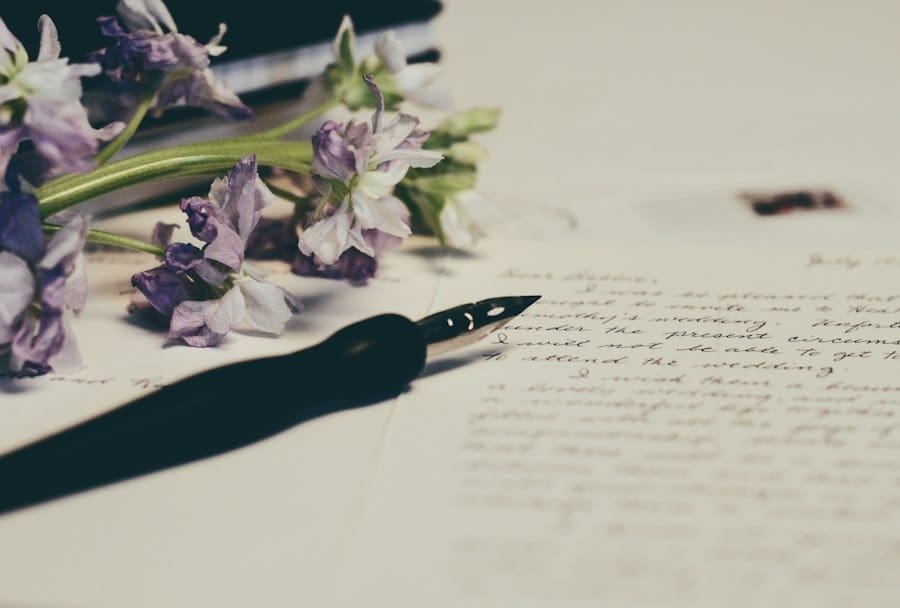
What truly draws me to epistolary novels is the way they leverage the inherent limitations of their format to create something far more powerful than a straightforward narrative. The absence of an omniscient narrator, the fragmented perspectives, and the delayed revelations all contribute to a reading experience that is both challenging and incredibly rewarding. I appreciate how this structure forces me to engage more deeply with the text, to question the reliability of each narrator, and to construct my own understanding of the unfolding events.
Building Suspense Through Unreliable Narrators
One of the most compelling aspects of epistolary novels, in my humble opinion, is their masterful use of unreliable narrators. When I read a letter, I'm not just reading words; I'm reading a person's carefully curated self-presentation, their biases, their hopes, and their fears. This creates a delicious tension, as I, the reader, am constantly questioning the veracity of what's being conveyed.
Think of Frankenstein, for instance. We experience Victor's hubris and descent into madness through his own frantic letters and Captain Walton's observations. Who is truly telling the objective truth? Is there even such a thing? This constant questioning makes the narrative far more engaging for me. I become a literary detective, sifting through subjective accounts, trying to discern the true motivations and events.
This unreliability isn't a flaw; it's a feature, and it’s one that I consistently find myself drawn to. It allows for a deeper exploration of human psychology, exposing the ways in which we filter and interpret our own experiences, often to our own advantage or detriment.
The Power of Gaps and Silences
Another element I adore is the power of what isn't said. Epistolary novels are inherently full of gaps and silences. A character might choose not to mention something, or a letter might go missing, or a reply might be delayed. These omissions, far from being frustrating, are often where the true magic happens for me. They create a sense of mystery, forcing me to fill in the blanks, to infer motives, and to imagine the unspoken.
This active participation makes the story feel more personal, as if I'm not just reading a narrative, but actively participating in its construction. In The Color Purple, Celie's early letters are sparse and direct, reflecting her subjugation and lack of voice. As she finds her strength, her letters become more expressive and detailed, mirroring her internal transformation. The evolution of her voice, and the gaps in her early communications, tell a story beyond the words themselves, a story I find deeply moving and insightful.
It's in these negative spaces that the story truly breathes, allowing me to connect with the characters on a much deeper, more empathetic level.
Historical Roots and Evolutionary Trajectories
The epistolary novel isn't a modern invention; its roots stretch back centuries, demonstrating its enduring appeal and adaptability. I find it fascinating to trace its evolution, observing how authors have continually reimagined and repurposed this form to suit their contemporary contexts. From its early emergence as a moralistic tool to its modern-day digital iterations, the epistolary novel has proven remarkably resilient.
Early Beginnings and Moralistic Intent
My exploration of the genre's history takes me back to the 17th and 18th centuries, a period where the epistolary form truly flourished. Authors like Samuel Richardson, with his groundbreaking Pamela, or Virtue Rewarded (1740), were instrumental in popularizing the style. I remember feeling a sense of discovery when I first learned that Pamela was not just a novel, but a collection of letters.
Richardson’s use of the form was often driven by a didactic purpose, aiming to impart moral lessons and to offer a detailed, intimate portrayal of human psychology, particularly that of women. The immediacy of letters allowed readers to experience events as they unfolded, fostering a strong sense of empathy for the characters. This immersion, for me, was a revolutionary concept in storytelling, pulling readers directly into the emotional turmoil and triumphs of the protagonists.
It presented a world not through a distant narrator, but through the immediate, subjective experience of the characters themselves, a technique that still resonates with me today.
Adapting to Modern Communication
As communication methods have evolved, so too has the epistolary novel. I've observed with great interest how authors have adapted the form to incorporate new technologies, expanding the definition of "letters" to include emails, text messages, social media posts, and even blog entries. This adaptation has kept the genre vibrant and relevant, demonstrating its flexibility in reflecting the contemporary human experience.
Consider novels like The Princess Diaries series by Meg Cabot, which cleverly weaves together journal entries, emails, and even faxes to tell Mia Thermopolis's story. More recently, I've seen novels that utilize Twitter threads or even fictional websites to present their narratives, pushing the boundaries of what an "epistle" can be. This willingness to innovate, to embrace the changing landscape of communication, is what keeps me so engaged with the genre.
It shows that the fundamental human desire to connect, to communicate, and to tell stories remains constant, even as the medium changes. The essence of the epistolary novel, for me, lies in its capacity to capture the authentic, raw voice of individuals, regardless of the technological conduit.
Crafting an Effective Epistolary Narrative
From my perspective as a reader, I can appreciate the significant challenges involved in crafting a compelling epistolary novel. It requires a delicate balance of revealing information while maintaining suspense, developing distinct voices, and ensuring the narrative progresses organically. When done well, the result is truly exceptional.
Maintaining Distinct Character Voices
One of the greatest challenges, and indeed one of the greatest joys for me as a reader, is witnessing an author's ability to maintain distinct character voices throughout an epistolary novel. Each letter writer, each diarist, each emailer must sound uniquely themselves. Their personality, their background, their education, their emotional state – all of these must be reflected in their writing style, their vocabulary, and their sentence structure.
I’ve read novels where the voices blurred, and it instantly diminished my immersion. Conversely, when an author nails this, as in Mary Ann Shaffer and Annie Barrows' The Guernsey Literary and Potato Peel Pie Society, where each character’s personality shines through their letters, it creates a rich tapestry of perspectives that feels incredibly authentic. I find myself anticipating certain characters’ letters, eager to hear their particular turn of phrase or their unique take on events.
This vocal differentiation is crucial for preventing monotony and for building a believable, multi-faceted world.
Pacing and Plot Progression Through Fragments
Another aspect that deeply impresses me is how authors manage to control pacing and plot progression within a fragmented narrative. Unlike traditional novels where a narrator can guide the reader smoothly from one scene to the next, epistolary novels rely on strategically placed "communications" to propel the story forward. A letter might arrive too late, a crucial piece of information might be withheld, or a series of rapid-fire exchanges might signify a dramatic escalation.
It requires a masterful hand to ensure that the story doesn't feel disjointed or slow, but rather that the gaps and delays contribute to the overall suspense and emotional impact. I especially admire authors who use these fragments to build towards a climactic revelation, making each new document feel like a crucial piece of a puzzle. This careful orchestration of information, the art of revealing just enough at the right moment, is what makes me appreciate the craft involved in this particular genre.
It’s a testament to the author’s ingenuity when I, as the reader, am constantly propelled forward by the desire to uncover the next piece of the story, even when presented in a non-linear fashion.
Epistolary novels have a unique way of engaging readers by allowing them to experience the story through letters, diary entries, or other forms of correspondence. This narrative style not only provides insight into characters' thoughts and emotions but also creates a sense of intimacy and immediacy. For those interested in exploring the deeper themes that can emerge from such storytelling techniques, an insightful article on the power of theme can be found here. Understanding how themes are revealed through various narrative forms can enhance one's appreciation of epistolary novels and their impact on readers.
My Personal Favorites and Lasting Impact
My journey through epistolary novels has introduced me to some truly unforgettable stories and characters. These are the books that have resonated with me the most, leaving a lasting impression and shaping my appreciation for this unique narrative form.
Evocative Examples that Stay With Me
Among the many epistolary novels I’ve devoured, a few stand out in my mind for their sheer brilliance and emotional depth. The Perks of Being a Wallflower by Stephen Chbosky, told through a series of letters from the introverted Charlie to an anonymous recipient, captures the raw vulnerability and confusion of adolescence in a way that feels intensely personal.
I remember feeling a profound connection to Charlie, as if I were the very person he was writing to, bearing witness to his struggles and triumphs. S. Lewis’s The Screwtape Letters offered me a delightfully clever and thought-provoking exploration of morality and temptation, presented through the correspondence between a senior demon, Screwtape, and his nephew, Wormwood. The satirical wit and the inverted perspective were, for me, incredibly insightful and often hilariously unsettling.
These books, among others, demonstrate the versatility of the epistolary form, showing how it can be used to explore a wide range of themes, from coming-of-age to theological discourse, all while maintaining that intimate, confessional tone that I cherish so much. They proved to me that the format isn't a limitation, but a powerful tool for profound storytelling.
The Enduring Legacy of the Letter
Ultimately, my love for epistolary novels stems from a deep appreciation for the written word as a means of connection and revelation. In an increasingly fast-paced and digital world, there's something beautifully deliberate and enduring about a letter. It's a tangible piece of a person, a snapshot of their thoughts and feelings at a specific moment in time. When I engage with an epistolary novel, I’m not just reading a story; I’m participating in a conversation across time and space.
I'm granted access to the innermost workings of a character's mind, witnessing their growth, their struggles, and their triumphs through their own unfiltered expressions. This genre reminds me of the power of individual voice, the complexities of human relationships, and the profound impact that a carefully chosen word can have. It’s a testament to the enduring human need to share, to communicate, and to leave a trace of oneself behind, a need that will continue to find expression in whatever new forms of communication emerge in the future.
Final Thoughts on Epistolary Novels
The simple act of writing, and the profound act of reading someone else’s written thoughts, creates a bridge that, for me, is endlessly fascinating and deeply rewarding.
Want to keep it all in one place? Story Bible Studio gives you a free digital story bible for your characters, places and plot, and Chain Story Online is a free place to test ideas in short collaborative stories.
Related reading: Mastering Verb Tense in Fiction: Past vs Present Narratives · Unveiling the Depths: Mastering Deep POV for Character Interiority
Written by Enda Storrie, writer and creator of Story Bible.