
The Unfurling of Self: A Pen's Promise
"Finding her voice," she said, picking up the pen. These six words, seemingly simple, resonate with a profound weight, encapsulating a journey that is simultaneously deeply personal and universally understood. It speaks to the arduous process of self-discovery, of wrestling with societal expectations, internal doubts, and often, past traumas, to finally articulate one's truth. The pen, in this scenario, is more than a mere writing implement; it is a conduit, a weapon, a lifeline. It signifies the transition from unspoken thoughts and unacknowledged feelings to a tangible expression, a declaration of existence.
This act of "finding her voice" is not a singular event but a continuous evolution, a forging of identity through articulation, whether it be through memoirs, musical compositions, public statements, or even quiet, personal journaling. It is the moment the internal landscape finds its external manifestation, the sound of a spirit finally daring to speak its name.
The Pen as a Catalyst for Transformation
For many, the act of writing, of physically picking up a pen and committing thoughts to paper, serves as a transformative ritual. It offers a unique space for introspection, a pause in the relentless flow of daily life to truly listen to the inner monologue. In an age dominated by fleeting digital interactions, the deliberate, physical act of writing with a pen offers a grounding experience. It slows down thought, allowing for a more considered and refined expression.
This tactile engagement can unlock emotions and perspectives that might otherwise remain submerged, providing a safe and private space to explore vulnerabilities and strengths. The pen becomes an extension of the self, a silent confidant through which raw emotions can be processed and profound insights can emerge. It is through this quiet communion that many have begun to unravel complex narratives, to understand their own histories, and ultimately, to articulate their authentic selves.
Beyond the Written Word: The Broader Spectrum of Voice
While the pen symbolizes a powerful form of expression, "finding her voice" extends far beyond literal writing. It encompasses a multitude of avenues through which an individual asserts their identity and shares their unique perspective. From the carefully crafted lyrics of a song to the impassioned words of a public address, from the directorial vision of a film to the everyday act of setting boundaries in personal relationships, the act of finding one's voice manifests in diverse forms.
The common thread, however, is the courage to communicate one's inner world, to challenge silence, and to claim one's rightful place in the ongoing human conversation. It is an assertion of agency, a declaration of presence, and a powerful act of self-definition in a world that often seeks to categorize and confine.
In the realm of writing, understanding the nuances of dialogue tags, such as the often-discussed "said bookisms," and the effective use of action beats can significantly enhance the clarity and engagement of your narrative. For a deeper exploration of how these elements interact with the perspective of your narrator and shape your story, you might find this article insightful: The Power of Perspective: How Your Narrator Shapes Your Story. This resource delves into the importance of narrative voice and its impact on dialogue, offering valuable tips for writers looking to refine their craft.
Breaking Chains and Building Bridges
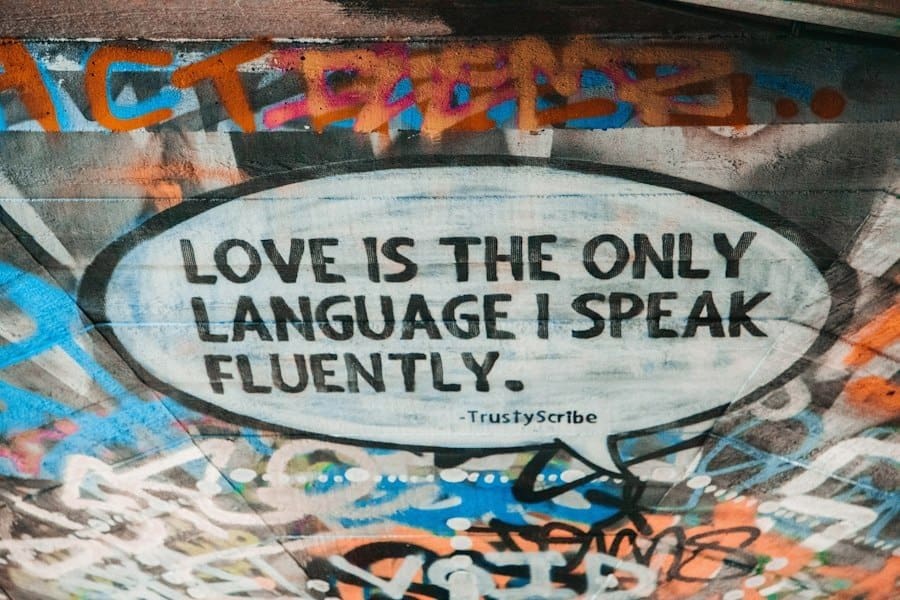
The narrative of "finding her voice" often emerges from a backdrop of constraint, a period where an individual's true self was suppressed, overlooked, or actively silenced. This journey frequently involves challenging established norms, questioning inherited beliefs, and dismantling self-imposed limitations. It is an act of liberation, both internal and external, that allows for the authentic self to finally bloom.
Jinger Duggar Vuolo's Emancipation
The anticipated narrative surrounding Jinger Duggar Vuolo's journey, though dated for 2025, perfectly encapsulates this breaking free from a "cult-like upbringing." In such environments, individual voices are often homogenized, and dissent is implicitly, if not explicitly, discouraged. To "find her voice" in this context implies a profound and courageous act of re-evaluation, of scrutinizing deeply ingrained doctrines and societal expectations that may have dictated her very being. The pen, in her anticipated story, would likely symbolize the meticulous process of deconstructing a past narrative and constructing an entirely new one, one that truly reflects her personal convictions and aspirations.
This is not merely about speaking up, but about redefining the very parameters of her existence, a testament to the enduring human spirit's capacity for self-determination. Her story, even in its anticipatory form, serves as a powerful beacon for others navigating similar terrains of restrictive upbringings, illustrating the potential for personal sovereignty even after years of institutionalized conformity.
Brittany Cartwright's Marital Metamorphosis
The report of Brittany Cartwright "finally finding her voice" amid her divorce from Jax Taylor offers another compelling illustration of this phenomenon. Marital relationships, particularly those under public scrutiny, can often lead to a subjugation of one partner's voice, either through overt control or subtle, unspoken power dynamics. Divorce, while inherently painful, can often serve as a crucible, forcing individuals to confront their own needs and desires, independent of another. For Cartwright, "finding her voice" in this context likely signifies a reclaiming of autonomy, a transition from perhaps accommodating or deferring to her partner to articulating her own boundaries, needs, and vision for her future.
The pen here might symbolize the drafting of legal documents, but more powerfully, it represents the internal drafting of a new life narrative, one where her own well-being and self-expression take precedence. This transition marks a shift from a potentially overshadowed existence to one where her individual identity is asserted with newfound strength and clarity.
The Power of Public and Private Declarations
Both Duggar Vuolo and Cartwright's experiences highlight that "finding her voice" is not always a public declaration. While Vuolo's story will likely be shared publicly, the initial stages of voice discovery are often intensely private, conducted in the quiet solitude of personal reflection, perhaps with a pen in hand. It's in these private moments that individuals consolidate their thoughts, validate their feelings, and build the internal fortitude necessary to then articulate their truth to a wider audience, be it a partner, a family, or the world at large. The gradual nature of this process is key; it’s a slow build-up of self-assurance and clarity before the public unveiling of a transformed self.
The Echoes of Silence and the Dawn of Expression

For many, the journey to finding their voice is preceded by a prolonged period of silence, a time when their experiences, thoughts, and emotions were kept under wraps, often due to external pressures or internalized inhibitions. The eventual breaking of this silence is a momentous occasion, signaling a shift from a passive existence to an active engagement with the world.
Savannah James's Emergence from the Spotlight's Shadow
Savannah James's narrative of "finding her voice after years away from the spotlight" is a particularly poignant example of this phenomenon. Often, the partners of highly public figures are relegated to a supportive, background role, their own identities potentially overshadowed by their spouse's fame. To step out of that shadow, to articulate her own narrative and perspective, requires immense courage and a conscious decision to define herself beyond her association with a prominent figure.
Her journey speaks to the universal struggle of individuals in the public eye – or those connected to them – to maintain and express their unique identity amidst constant external scrutiny and expectations. The "spotlight," in her case, paradoxically created a space for silence, and her subsequent "finding her voice" represents a deliberate act of carving out her own space for expression, establishing an independent identity that resonates with her personal truths.
The Intricacies of Suppressed Voices
The reasons for a suppressed voice are multifaceted. They can range from societal pressures to conform, cultural norms that prioritize certain voices over others, personal insecurities, or even the subtle erosion of self-worth over time. For women especially, historically, their voices have been marginalized in various spheres, from political discourse to artistic expression. The act of "picking up the pen" or taking the stage becomes a powerful counter-narrative to centuries of silence, a reclamation of agency and an assertion of equal standing. Savannah James’s experience resonates with countless individuals who have felt their individuality diminish in the shadow of others, highlighting the profound importance of self-assertion.
The Gradual Unveiling of Truth
The process of moving from silence to expression is rarely instantaneous. It is often a gradual unveiling, a testing of the waters, a slow but steady building of confidence. This might involve tentatively sharing thoughts with a trusted friend, experimenting with creative outlets in private, or slowly asserting oneself in familiar settings before daring to speak on a larger platform. Each small act of expression, each step towards authenticity, fortifies the voice, making it stronger and more resonant for future declarations. The pen, in these early stages, can be a private confidant, a safe space to practice and refine one's truth before it is shared with the world.
Discover the ultimate tool for writers at Story Bible Studio, where creativity meets organization. Enhance your storytelling process with the innovative features of Story Bible Studio. Join a community of storytellers who trust Story Bible Studio to bring their narratives to life.
The Art of Articulation: Crafting a Unique Sound
"Finding her voice" is not simply about speaking; it is about articulating a unique perspective, a distinct sound that is unmistakably one's own. This involves honing one's craft, understanding one's message, and developing the confidence to present it authentically. For artists, this process is central to their creative identity.
Billie Eilish's Songwriting Revelation
Billie Eilish's story of "finding her voice" as a songwriter and vocalist perfectly illustrates this artistic journey. Her distinctive musical style, characterized by breathy vocals, dark lyrical themes, and experimental production, is a testament to her unique artistic vision. For Eilish, "finding her voice" was not just about singing, but about discovering and cultivating a sound that was entirely hers, one that resonated with a generation and challenged conventional pop aesthetics. This involves a deep dive into self, an exploration of personal experiences and emotions, and the courage to translate those into a coherent and compelling artistic statement.
The "pen" in her case, metaphorically, would be the composition process, the meticulous crafting of lyrics and melodies that perfectly encapsulate her internal world and communicate it effectively to her audience. Her success is a powerful reminder that authenticity, when expressed with conviction, possesses an undeniable power to connect and resonate.
The Multi-faceted Nature of Artistic Voice
An artistic voice encompasses more than just sound; it involves a unique perspective, a particular lens through which the artist views the world. For a songwriter, this means crafting lyrics that are evocative and meaningful, melodies that are memorable and impactful. For a visual artist, it means developing a distinctive style and thematic approach. The process is one of constant experimentation, refinement, and a relentless pursuit of authenticity. It involves understanding one's strengths, acknowledging one's weaknesses, and daring to deviate from established norms to create something truly original. "Finding her voice" as an artist is a lifelong pursuit, a continuous evolution and refinement of one's creative output.
From Inner Vision to Outward Expression
The journey from an inner artistic vision to an outward expression is often challenging. It requires vulnerability, the willingness to put one's innermost thoughts and feelings on display for public consumption and critique. The "pen," or its artistic equivalent, serves as the bridge between these two worlds, transforming abstract ideas into concrete works of art. This act of creation is inherently an act of "finding her voice," as it allows the artist to project their unique perspective onto the world, inviting others to experience their truth. It’s a powerful testament to the transformative power of art as a medium for self-discovery and communication.
When crafting engaging dialogue in your writing, it's essential to understand the nuances of dialogue tags, including the often-discussed concept of "said bookisms." These tags can either enhance or detract from the flow of conversation, making it crucial to choose them wisely. Instead of relying heavily on adverbs or creative alternatives to "said," many writers find that incorporating action beats can provide a more dynamic way to convey emotion and intent. For a deeper exploration of these techniques, you might find this article on storytelling particularly insightful, as it delves into the art of crafting compelling narratives. You can read more about it here.
The Cinematic Lens: Reflecting and Amplifying Voices
The power of narrative to explore and illuminate the theme of "finding her voice" is profoundly evident in cinema. Film, with its unique ability to combine visual storytelling, dialogue, and performance, offers a compelling medium to explore the complexities of this journey.
"Finding Her Voice" (Short, 2024): Lily's Academic Journey
The short drama film "Finding Her Voice" (2024), centering on Lily, an academically brilliant girl in NYC, offers a fascinating specific example. While details are sparse, the premise suggests a narrative where intellectual prowess might not automatically equate to personal expression. "Finding her voice" for Lily could involve navigating the pressures of academic excellence, societal expectations, or even the challenge of translating her brilliance into meaningful personal connections and self-advocacy. In an environment like NYC, teeming with diverse voices and competitive pressures, her journey to articulate her unique perspective and stand firm in her identity would be particularly resonant.
The film likely explores the subtle nuances of how an individual's internal world (her academic brilliance) interacts with her external environment, and the process by which she learns to assert herself beyond her intellectual achievements. The "pen" in this context could be metaphorical – perhaps her academic writing, or more likely, the realization that her voice extends beyond the confines of intellectual exercises, into the realm of personal agency and self-expression in a complex urban landscape.
The Screen as a Mirror and a Megaphone
Cinema, as a medium, often serves as both a mirror and a megaphone. It reflects the individual experiences of its characters, allowing audiences to see themselves and their own struggles represented on screen. Simultaneously, it acts as a megaphone, amplifying the voices and stories of those who might otherwise remain unheard. A film titled "Finding Her Voice" directly engages with this amplifying function, explicitly declaring its intent to explore the protagonist's journey of self-discovery and expression.
It foregrounds the importance of an individual's unique perspective and the often-arduous path to articulating it. The act of watching such a film can, in itself, be an act of "finding her voice" for the audience, inspiring introspection and encouraging them to consider their own journeys of self-expression.
The Collaborative Nature of Voice in Film
While a protagonist like Lily "finds her voice" within the narrative, the creation of the film itself is a collaborative act of many voices. From the screenwriter who "picks up the pen" to craft the story, to the director who shapes the visual narrative, to the actors who embody the characters, and the crew who bring it all to life – each contributes their unique voice to the final product. This collaborative aspect underscores that "finding her voice" can be a shared journey, where individual expressions intertwine to create a larger, more resonant message. The film, therefore, is not just about Lily's individual transformation, but also a testament to the power of collective storytelling in articulating universal human experiences.
Written by Enda Storrie, writer and creator of Story Bible.


