I’ve often found myself grappling with the subtle distinctions in literary analysis, particularly when it comes to understanding the core messages within stories. Two terms that frequently arise and are sometimes, to my frustration, used interchangeably, are “theme” and “moral.” While they both delve into the deeper meaning of a narrative, my journey through countless books and films has taught me that they are, in fact, distinct entities, each serving a unique purpose in how we interpret and connect with a story. In this article, I want to share my understanding and the insights I’ve gained regarding the nuanced differences between these crucial literary concepts.
Unpacking the Essence of Theme
When I think about theme, I envision the foundational bedrock of a story. It’s the central idea, the underlying message, or the universal truth that the narrative explores. For me, a theme isn’t a direct instruction or a piece of advice; rather, it’s a broad concept that the author presents for contemplation. It’s what the story is about on a deeper level, beyond the plot and characters. Themes are often complex and multifaceted, inviting me to ponder the human condition, societal structures, or philosophical questions. They are typically expressed as abstract nouns or short phrases, such as “love,” “loss,” “redemption,” “the corrupting influence of power,” or “the struggle for freedom.”
I’ve learned that themes are rarely explicitly stated by the author. Instead, they emerge organically through the characters’ actions, their dialogues, the setting, and the overarching plot. It’s my job, as a reader or viewer, to infer these themes, to piece together the clues the author has laid out for me. A single story can, and often does, explore multiple themes simultaneously, creating a rich tapestry of meaning. For example, a story about a character overcoming a personal struggle might touch upon themes of resilience, self-discovery, and the importance of community. The beauty of theme, for me, lies in its open-endedness. It allows for diverse interpretations, sparking discussions and encouraging me to connect the story’s ideas to my own experiences and perspectives.
How Themes Manifest in Narrative
I’ve noticed that themes aren’t just abstract ideas floating above the story; they are deeply embedded within its fabric. Every element of the narrative, from the most minor character interaction to the grandest plot twist, can contribute to the development of a theme. I often find myself looking for recurring motifs, symbols, and character arcs that subtly reinforce these central ideas.
Character Arcs as Thematic Vehicles
For me, one of the most powerful ways themes are conveyed is through the transformations of characters. When I see a character change and grow (or even regress) over the course of a story, I invariably connect their journey to a larger thematic idea. For instance, a character who begins as selfish and isolated but learns the value of empathy and connection is illustrating the theme of community or the transformative power of love. Their internal struggle and eventual resolution become a lived example of the theme the author wishes to explore. I’ve often found that the most compelling characters are those whose arcs directly serve to illuminate a core thematic question.
Symbolism and Imagery in Theme Development
I’m always on the lookout for recurring symbols or vivid imagery that an author employs to deepen thematic understanding. A wilting flower might symbolize lost innocence, a stormy sea could represent turmoil or impending conflict, or a towering mountain could embody the challenges a character must overcome. These symbolic elements, while seemingly disparate, often coalesce to reinforce the broader thematic concerns. For example, in a story about environmental decay, repeated imagery of pollution or dying landscapes would powerfully contribute to the theme of humanity’s impact on nature. I find that this subtle, visual reinforcement often leaves a more lasting impression on me than any direct statement.
Conflict as a Thematic Crucible
Conflict, whether internal or external, is absolutely essential in bringing themes to the forefront. I see conflict as the crucible in which thematic ideas are tested and refined. When characters face dilemmas, clash with antagonists, or struggle against societal norms, these struggles aren’t just about advancing the plot; they are fundamentally about exploring the story’s themes. A conflict between a protagonist seeking justice and a corrupt system, for instance, directly addresses themes of fairness, power, and societal inequality. The resolution (or lack thereof) of this conflict offers the author’s perspective or invites me to consider different facets of the theme.
Understanding the distinction between theme and moral is crucial for any writer, as it shapes the core message of a narrative. While the theme refers to the underlying ideas or concepts explored in a story, the moral conveys a specific lesson or principle that can be derived from it. For those looking to enhance their storytelling skills, you might find it beneficial to explore how a story bible can aid in clarifying these elements. Check out this insightful article on the topic: 5 Ways a Story Bible Can Revolutionize Your Writing Process.
Dissecting the Nature of Moral
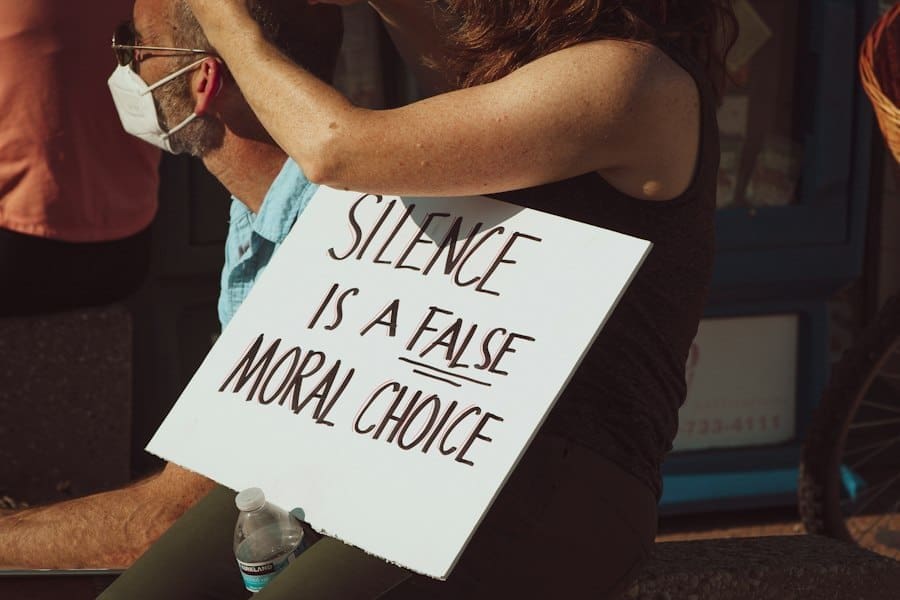
In contrast to the expansive nature of theme, I perceive a moral as a more direct, instructional takeaway from a story. If a theme is what the story is about, then a moral is what the story teaches me or advises me to do. It’s a specific lesson, a principle of conduct, or a rule of thumb for living that the narrative explicitly or implicitly advocates. Morals are often didactic, aiming to guide behavior or instill a particular value. They are typically expressed as a maxim, a proverb, or a piece of practical wisdom, such as “Honesty is the best policy,” “Look before you leap,” or “Don’t judge a book by its cover.”
I find that morals are most prevalent in fables, parables, and children’s literature, where the intention is often to impart clear ethical guidelines. In these cases, the moral is sometimes even stated outright at the end of the story, leaving no room for ambiguity. While more complex literature might contain moral implications, it’s rare to find a single, universally agreed-upon “moral” in the same way one might find a clear moral in Aesop’s Fables. I’ve learned that adult literature tends to lean more towards exploring themes rather than delivering explicit morals, inviting me to grapple with moral ambiguities rather than providing straightforward answers. The journey of understanding good and bad, right and wrong, becomes part of the thematic exploration itself, rather than a singular directive.
The Explicit and Implicit Moral
My understanding of morals has evolved to recognize that they don’t always hit me over the head with their message. There’s a spectrum, from overt statements to subtle suggestions.
Stated Morals in Fables and Parables
When I read a fable, the moral is often presented to me as a neat, concise package. Think of “The Boy Who Cried Wolf,” where the moral, “No one believes a liar, even when he is telling the truth,” is almost always appended to the narrative. This directness, I believe, is part of the genre’s purpose: to clearly convey a lesson, especially to a younger audience or to illustrate a particular ethical principle. These stories are designed, from their inception, to be instructive. I find these explicit morals comforting in their clarity, leaving no doubt about the intended message. They serve as immediate, practical guides for behavior.
Implied Morals in Literary Fiction
In more sophisticated literary works, a moral might not be stated directly, but it can still be inferred from the story’s outcome or the consequences faced by the characters. For example, a novel where a character’s greed ultimately leads to their downfall might implicitly suggest that “Greed leads to ruin.” However, I find that even these implied morals are often more nuanced than the straightforward statements of fables. The author might present the downfall not just as a punishment for greed, but also as an exploration of the pressures that led to the greed in the first place, thus blurring the line between a simple moral and a thematic exploration of human frailty. I always have to be careful not to reduce a complex narrative to a single, simplistic moral, as this can often overlook the richer thematic layers.
The Overlap and Divergence
This is where things can get a bit tricky for me, and where I often see confusion arise. Both themes and morals contribute to the meaning of a story, and they can sometimes seem to dance around similar ideas. A story that explores the theme of “the dangers of unchecked ambition” might also have a moral implication of “Don’t let ambition blind you to others.” The ideas are clearly related, but their scope and purpose differ.
I like to think of it this way: a theme is a question or an exploration, while a moral is an answer or a directive. A theme invites me to think deeply about a universal truth; a moral tells me how to act based on that truth. For instance, the theme of “love” is broad and can encompass various aspects: unconditional love, unrequited love, love as a destructive force, etc. A moral related to love might be “Love conquers all,” or “Never take true love for granted.” The theme probes the nature of love, while the moral advises on its application or implications for behavior.
Another crucial distinction I’ve observed is the universality versus specificity. Themes tend to be more universal and timeless, resonating across cultures and generations. The theme of “the human struggle against nature” will always be relevant. Morals, while often rooted in universal values, can sometimes be more culturally or contextually specific in their direct application. While “honesty is the best policy” is widely accepted, the specific ways honesty is valued or expressed can vary.
Story’s Purpose: Exploration vs. Instruction
To me, the fundamental difference between theme and moral boils down to the author’s primary intent. Is the story designed primarily to make me think and reflect, or is it intended to teach me a lesson and guide my actions?
The Thematic Author as an Explorer
When an author prioritizes theme, I feel like they are inviting me on an intellectual and emotional journey. They are posing questions rather than providing definitive answers. They want me to consider different perspectives on a complex issue, to see the shades of grey rather than just black and white. For example, a novel exploring the theme of “justice” might present characters who interpret justice in radically different ways, or show how the pursuit of justice can sometimes lead to injustice. The author isn’t telling me what justice is or how to achieve it; they are showing me its complexities and asking me to grapple with those complexities myself. I find this approach incredibly engaging because it respects my intelligence and encourages my own critical thinking. It fosters a deeper, more personal connection to the material.
The Moralizing Author as a Teacher
On the other hand, when an author leans heavily into moral, their role shifts more towards that of a teacher or a guide. Their primary aim is to impart a specific lesson or reinforce a particular value. They often structure the narrative in a way that clearly demonstrates the positive consequences of adhering to the moral and the negative consequences of violating it. This is not to say that moralizing stories are inherently simplistic, but their objective is often clearer and more direct. For instance, a cautionary tale about the dangers of vanity explicitly wants me to understand that vanity is a negative trait and that I should avoid it. While I appreciate the clarity of such stories, I sometimes find them less challenging to my own beliefs and assumptions.
Practical Application in Analysis
When I approach a new story, whether it’s a novel, a film, or even a song, I consciously try to differentiate between its themes and its potential morals. This distinction helps me to conduct a more thorough and accurate analysis, and it prevents me from oversimplifying complex narratives.
Firstly, I always look for the overarching concepts or ideas that the story repeatedly touches upon. These are usually my themes. I ask myself: What big ideas is the author exploring? What aspects of the human experience or society are being examined? I try to express these themes as abstract nouns or phrases, keeping them broad and open to interpretation. For example, if I’m reading “Romeo and Juliet,” I’d identify themes like “the destructive nature of feuds,” “the power of love,” and “fate vs. free will.”
Secondly, I consider if the story offers any clear lessons or pieces of advice. Does it suggest a particular way I should behave or a value I should uphold? If so, that’s likely a moral. With “Romeo and Juliet,” while there isn’t a single, universally accepted “moral” like in a fable, one might infer a moral such as “Unchecked hatred can lead to tragic consequences.” However, I recognize that this moral is less prominent than the rich thematic exploration. I always remind myself that not every story has a clear moral, especially in contemporary literature, and that trying to force one can distort the author’s original intent.
Avoiding Common Misconceptions
Through my analytical journey, I’ve encountered several pitfalls that I strive to avoid when distinguishing between theme and moral.
Theme is Not Plot Summary
One of the most common mistakes I see (and have sometimes made myself) is confusing a theme with a plot summary. The plot tells me what happens in the story; the theme tells me what the story means. For example, the plot of “Cinderella” involves a mistreated girl, a fairy godmother, a ball, and a lost slipper. The themes, however, could be “the triumph of good over evil,” “the importance of kindness,” or “the realization of dreams.” I constantly remind myself to look beyond the surface events to the underlying ideas.
Moral is Not Universal Truth
While morals often draw on universal values, I’m careful not to equate them with universal truths in the same way I might equate a theme. A moral is a lesson or a guideline, often presented within a specific narrative context. A theme, on the other hand, explores a universal truth, examining its various facets and implications. For example, “Always be kind” is a moral. “The complexities of human kindness” is a theme that would delve into why people are kind, the challenges of being kind, or the consequences of kindness. I’ve learned that themes often raise questions about universal truths, while morals aim to provide specific answers.
Understanding the distinction between theme and moral can greatly enhance your storytelling skills. While the theme explores the underlying message or central idea of a narrative, the moral often serves as a lesson or ethical takeaway for the audience. For those interested in how different elements of storytelling can influence the audience’s perception, a related article discusses how the narrator shapes your story and can impact both theme and moral. You can read more about this fascinating topic in the article found here.
Why This Distinction Matters to Me
Understanding the difference between theme and moral has profoundly enriched my experience as a reader and a critical thinker. It allows me to appreciate the nuanced layers of meaning within a story and to engage with literature on a deeper intellectual level.
When I can accurately identify themes, I feel I’m truly grasping the author’s vision. It helps me to see how the various elements of the story—characters, plot, setting, and style—all work together to convey a central idea. This understanding makes the narrative more cohesive and impactful for me. It also opens up avenues for discussion and interpretation, as themes, by their very nature, invite multiple perspectives. I love engaging in conversations about the different themes I’ve identified in a work, as it invariably leads to new insights and a broader appreciation.
Conversely, recognizing when a story is primarily driven by a moral helps me to understand its didactic purpose. It allows me to appreciate the clarity and directness of the message, particularly in genres where moral instruction is key. It also helps me to avoid imposing a simplistic moral onto a story that was designed for complex thematic exploration, thus respecting the author’s artistic intent. I believe that a nuanced understanding of these concepts is essential not just for literary analysis, but also for navigating the narratives we encounter in everyday life, whether in news, advertising, or personal anecdotes. It empowers me to think critically about the messages being conveyed and to discern between an invitation to reflect and a direct instruction. This distinction, for me, is a cornerstone of intelligent engagement with the world around me.