A disaster scene works when every fix makes things worse. Here is how to set one up, escalate it step by step and leave your characters changed.
Bonus: Download the free Story Bible Starter Kit and plan your story section by section as you read.
This November, join the Samhain Story Sprint: a free 30-day writing challenge with three paces. Ten days in, your story has probably reached the point where something big needs to go wrong. This is how to make it count.
Some scenes are about one thing going wrong. A disaster scene is about everything going wrong, one piece at a time, until your characters are standing in the wreckage of their plans. Done well, it's the scene readers remember. Done badly, it's noise: lots of crashing and shouting and nobody caring.
The difference isn't the size of the disaster. A burst pipe at a wedding can grip as hard as an earthquake. The difference is how you build it.
What Makes a Disaster Scene Work
A disaster scene works when each failure causes the next. The power cuts out, so the lift stops, so the phone is the only light, so the battery matters, so the call to the one person who could help never gets through. Cause and effect, link by link. Readers feel the chain tightening because every step makes sense.
Compare that with a list of bad luck: a power cut, then a fire, then a random storm. Each might be dramatic, but none of them grows out of the last. Coincidence feels like the author piling on. Consequence feels like fate.
Set It Up Before Anything Breaks
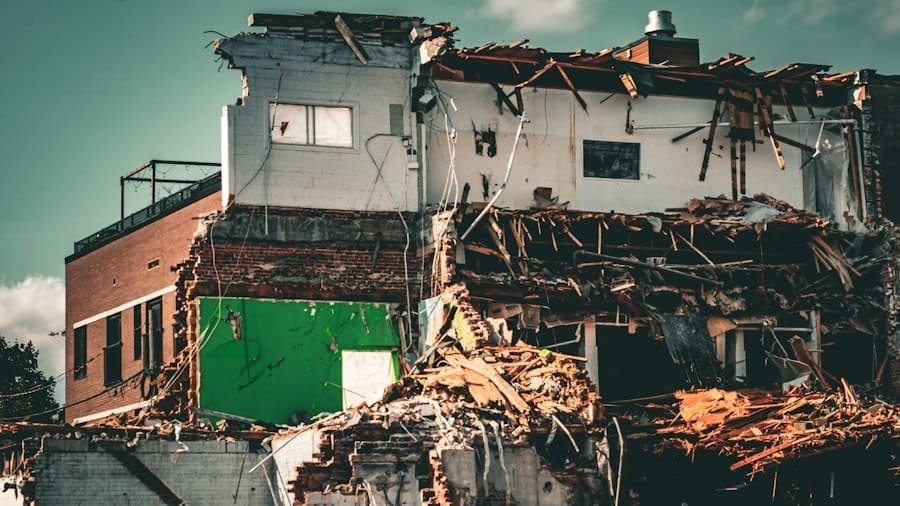
The best disaster scenes are planted chapters earlier. Show the weak points quietly before the scene: the fire door that sticks, the boat that's overdue a service, the friend who always panics, the hero who never asks for help. Readers half-notice these and forget them. When they break, the disaster feels inevitable instead of invented.
Your characters' flaws belong on that list too. Pride, fear, a secret, a bad habit. A disaster scene is a pressure test, and the cracks you planted in your people should give way along with the cracks in the building.
Then give us a moment of calm. A celebration, a small win, a sense that things are finally going right. The higher the reader's hopes, the further they fall. On its own that's a cheap trick; built on real setup, it's just good timing.
Escalate One Step at a Time
Once the first thing breaks, keep three rules in mind.
- Every fix makes it worse. Your character's attempt to solve the problem should create a new one. They prop the door open and the smoke follows them. They call for help and give away where they're hiding. This is the try-fail cycle at full speed.
- Take away the safety nets. Help that should arrive doesn't. The phone has no signal, the car won't start, the one person who knows the way out is hurt. Remove options until only the hard ones are left.
- Raise the personal stakes, not just the noise. A collapsing bridge matters because someone we love is on it. Make every new setback threaten something your character cares about.
Watch your pacing. Short sentences and short paragraphs speed things up when the action is fast. Then slow down for a single, clear moment, a hand slipping or a face at the window, so the reader feels it before the next blow lands.
Keep the Disaster Scene Inside Your Character
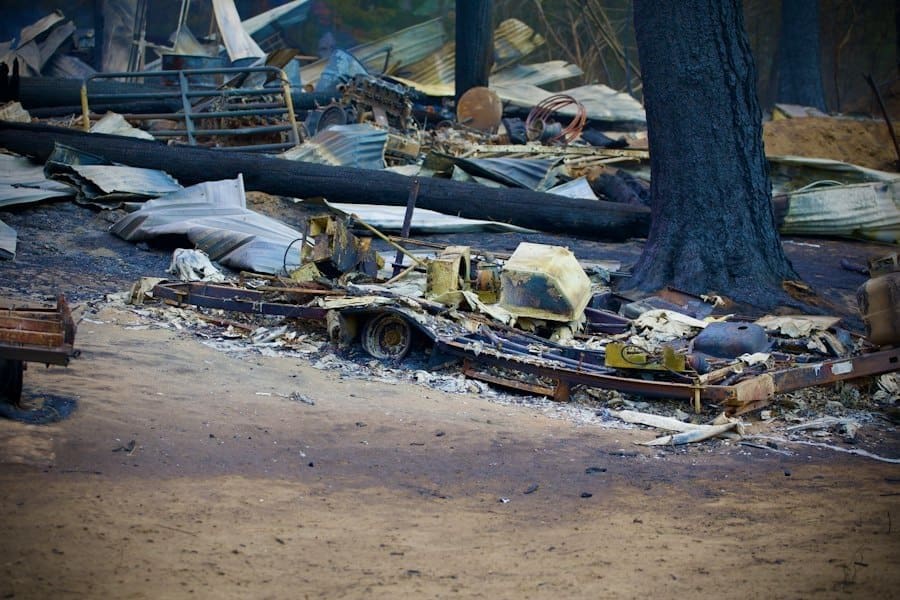
A disaster seen from far away is a news report. Seen through one frightened person, it's a story. Stay close to your point-of-view character. What do they notice? What do they get wrong? Panic narrows vision. People fixate on small things, make bad calls and remember odd details afterwards.
Let other people react too. Some freeze, some take charge, some make it worse. Disasters reveal character fast, and the way your cast behaves under pressure can be the most memorable part of the scene. My post on character roles that win readers over is a handy check on who does what in a crowd.
Don't Rescue Them Too Easily
The quickest way to spoil a disaster scene is a clean escape. If the hero walks out without a scratch and everything is rebuilt by the next chapter, the reader learns that nothing in your story really costs anything.
Let it leave marks. Someone is hurt or lost. A place is gone. A secret came out in the chaos. A friendship cracked under pressure. The disaster should change what happens next and who your characters are. Those marks also give your theme room to speak, because a disaster is where you test what your story believes. My post on the power of theme goes further.
Keep Track of What Breaks
A big disaster scene touches a lot of moving parts: who was where, who was hurt, what was destroyed, what was said. Note each change in your story bible as you draft, so that in chapter twenty nobody drives the car that burned in chapter twelve.
Final Thoughts on Writing a Disaster Scene
A disaster scene isn't about the size of the explosion. It's a chain: weak points planted early, a moment of calm, one failure causing the next, every fix making things worse, and a cost that lasts. Build those links and readers will hold their breath with your characters.
The Samhain Story Sprint: it runs from 1 to 30 November, and it is free. Read the Samhain Story Sprint guide, then pick your pace and join a group in Story Bible Studio: Spark (10,000 words), Sprint (30,000 words) or Storm (50,000 words).
Ready to keep track of the wreckage? Story Bible Studio keeps your characters, places, plot notes and draft in one place. Want to practise with other writers? Try a round of collaborative fiction on Chain Story Online, and find more ideas for readers and writers on Enda Storrie.
Build it in Story Bible Studio: note who was hurt, what was lost and what changed, right beside the chapter you are drafting. Create your free Story Bible Studio account, then grab the free Story Bible Starter Kit to fill it in section by section.
Still comparing tools? See the best novel organisation apps and Scrivener alternatives.
Related reading: How to Write an Opening Scene That Hooks From Line One · Scene Goals: Give Every Scene a Job
That's it. Enda Storrie
P.S. Planning a story? Grab the free Story Bible Starter Kit: 8 fillable pages for your characters, places and timeline.