Drafting your final scene first gives your novel a destination. Here is why it works, how to do it and how to steer every chapter towards your ending.
Writing along with the Samhain Story Sprint? Week four is Homeward, the week you steer your story towards its end. Sprint writers have it as this week's assignment: draft the final scene first.
Bonus: Download the free Story Bible Starter Kit and plan your story section by section as you read.
Why Write the Final Scene First?
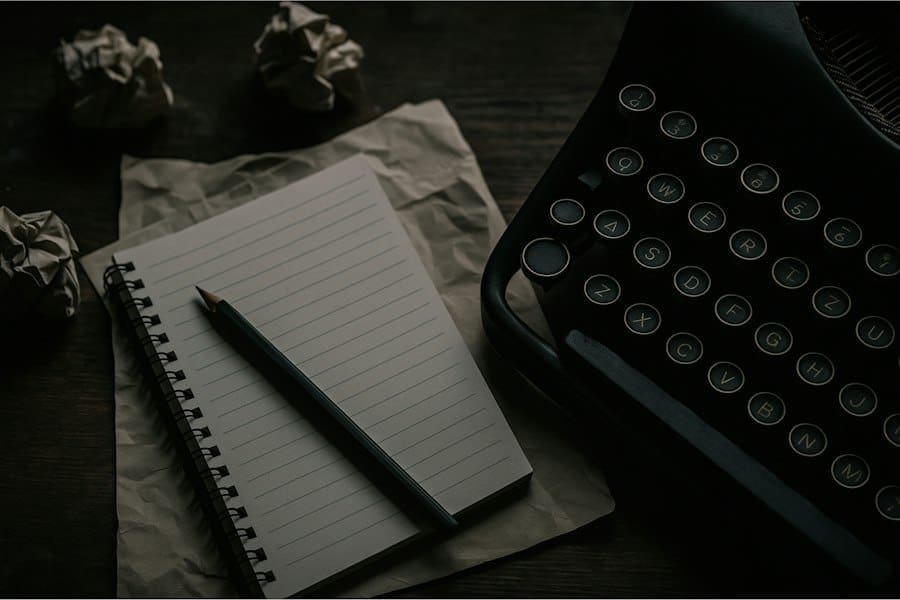
Most of us write in order. Chapter one, chapter two, and on until the end appears. That works for some books. For many others, the middle drifts, because the writer doesn't yet know where the road leads.
Writing the final scene first gives you a destination. Once you know the last image, the last choice and the last line, every scene before it has something to aim for. You aren't wandering. You are travelling.
Plenty of writers work this way. John Irving has often said he begins with his last sentence and works backwards. You don't need to go that far, but a rough ending on paper changes how you write everything else.
What Drafting the Ending Early Does for Your Story
- It fixes the middle. A saggy middle usually means the story has lost its pull. A known ending gives the middle a direction.
- It sharpens your theme. Your ending is where the story's argument lands. Write it, and you will see what the book is really about.
- It shows you what to plant. If the hero wins with a skill, a secret or an object, you now know it needs to appear earlier.
- It keeps you going. On a hard day, it is easier to write towards a scene you love than into fog.
How to Draft Your Final Scene First
Your ending scene doesn't need to be polished. It needs to exist. Give yourself one or two sprints and work through these questions.
1. Decide what changes
Who is your protagonist on the last page, and how are they different from page one? Write that change down in one sentence before you start the scene. Everything in the scene should show it.
2. Choose the final choice
Strong endings turn on a decision. Your character chooses: to forgive, to leave, to tell the truth, to let go. Make the choice cost something. If it is easy, it won't feel like an ending.
3. Find the last image
Readers remember endings as pictures: a door closing, a boat leaving, two people at a kitchen table. Pick an image that echoes something from the opening. That echo makes the story feel complete.
4. Write it fast
Draft the scene in one go, without stopping to fix. Use brackets for anything you don't know yet: [HOW SHE GOT THE KEY]. Those brackets become your to-do list for the rest of the draft.
Steering Every Chapter Towards Your Final Scene

Once the ending exists, read it and make a short list of what the reader must know, feel and see before they get there. Then check each chapter against that list.
- Plant the payoffs. Every tool your hero uses at the end needs to be set up earlier, ideally more than once.
- Raise the pressure. Use pinch points and try-fail cycles so the ending feels earned.
- Bring the hero low. The final choice lands harder after a real dark night of the soul.
- Cut the detours. If a subplot has nothing to do with your ending, it is a candidate for the chop.
What If the Ending Changes?
It might, and that is fine. Characters surprise us. A final scene written in week one is a compass, not a contract. If your story pulls in a better direction, follow it, then rewrite the ending to match.
Even a changed ending has done its job. It got you through the middle, and it showed you what kind of story you were writing. The second version will be stronger because the first one existed.
Final Thoughts on Writing Your Final Scene First
Drafting your final scene first turns a long, uncertain middle into a journey with a destination. Decide what changes, choose the final choice, find the last image and write it quickly. Then go back and plant everything the ending needs. When you are ready to polish it, our guide on how to write a climax will help.
The Samhain Story Sprint: it runs from 1 to 30 November, and it is free. With a week to go, knowing your ending is the best way to finish strong. Read the Samhain Story Sprint guide, then join a group in Story Bible Studio: Spark (10,000 words), Sprint (30,000 words) or Storm (50,000 words).
Ready to plan your own story? Keep your ending, characters and story bible beside your manuscript in Story Bible Studio. Want to practise with other writers? Try a round of collaborative fiction on Chain Story Online, and find more ideas for readers and writers on Enda Storrie.
Build it in Story Bible Studio: write your final scene, then keep a list of what it needs beside every chapter you draft. Create your free Story Bible Studio account, then grab the free Story Bible Starter Kit to fill it in section by section.
Still comparing tools? See our pick of the top novel organisation apps.
Related reading: How to Write a Climax That Delivers · How to Write a Cliffhanger Without Cheating Your Readers
That's it. Enda Storrie
P.S. Planning a story? Grab the free Story Bible Starter Kit: 8 fillable pages for your characters, places and timeline.